
Permanent makeup pigments for estheticians are formulated pigment products used for microblading, powder brows, lip blush, and areola or scar camouflage — distinct from body tattoo ink in viscosity, particle size, and depth of implantation. An esthetician moving into microblading needs a pigment line that's documented, batch-consistent, and legal to use under the state's PMU licensing rules, not just whatever ships fastest from a marketplace listing.
- Permanent makeup pigments for estheticians differ from tattoo ink in viscosity and depth — don't substitute one for the other.
- REACH-compliant, sterile pigment lines like Intenze reduce the risk of undocumented ingredients showing up on a client's face.
- A starter brow kit needs warm, cool, and neutral correction shades, not one universal brown.
- Buying from authorized distributors, not gray-market resellers, is the single biggest risk control for a new PMU practice in 2026.
Why permanent makeup pigments matter for estheticians
Microblading and powder brow work put pigment on facial skin, often on clients who are already particular about how their skin reacts to products. An esthetician adding PMU services in 2026 is taking on a different liability profile than a body tattoo artist: shallower implantation depth, thinner skin, and clients who expect the color to heal true without shifting warm or ashy.
The pigment line matters more here than in body tattooing because there's less room to correct a bad color choice. A brow that heals too orange or too gray is on the client's face for months, and fixing it means another session, more product, and a client who's now skeptical. Estheticians who get the sourcing and shade-matching right the first time build repeat business; the ones who don't spend their second year doing corrective work instead of new clients.
Credibility markers matter for a reason beyond marketing language. REACH-compliant documentation means the pigment's ingredient list has been checked against the EU's chemical safety framework — a standard many US buyers now expect even for domestic sales. Intenze has built its permanent makeup pigment line on that kind of documentation, backed by over 30 years of professional artist use in body tattooing before extending into PMU formulations.
Update your understanding of pigment vs. ink
Tattoo ink and PMU pigment are not interchangeable, even from the same manufacturer. PMU pigment is generally thinner and designed for shallower implantation (0.5mm to 1.2mm range in typical microblading technique), while body tattoo ink is built for deeper, more saturated deposit.
- Check the product label for "permanent makeup" or "PMU" designation, not just "tattoo ink"
- Confirm the manufacturer states an intended implantation depth range
- Ask whether the pigment is iron oxide-based (more predictable healing) or carbon-based (can shift cooler over time)
- Avoid diluting body ink with water or saline to make it "thinner enough" for brow work — that changes particle suspension, not formulation
Check your state's PMU licensing requirements
Licensing for microblading and PMU varies by state, and some states regulate it under cosmetology boards while others fold it into body art or tattoo licensing. This step comes before any pigment purchase, not after.
- Confirm whether your state requires a separate PMU or micropigmentation certification beyond esthetician licensing
- Check if your state mandates bloodborne pathogen training specific to PMU procedures
- Verify your studio or booth rental agreement covers PMU liability, not just esthetics services
- Ask your state board whether continuing education hours apply to PMU renewal
Match pigment to skin tone and Fitzpatrick type
Color theory for PMU runs on the same Fitzpatrick scale used across dermatology, but the practical application is about undertone correction, not just picking a shade that looks right in the bottle.
- Identify the client's underlying skin undertone (warm, cool, neutral) before picking a brow shade
- Stock a correction pigment (often a warm or orange-based tone) to counter cool ash healing on fair skin
- Test healed results on your own practice skin or approved mannequin material before client work — pigment color in the bottle and pigment color healed are not the same thing
- Keep a shade reference chart at the station, not just in memory
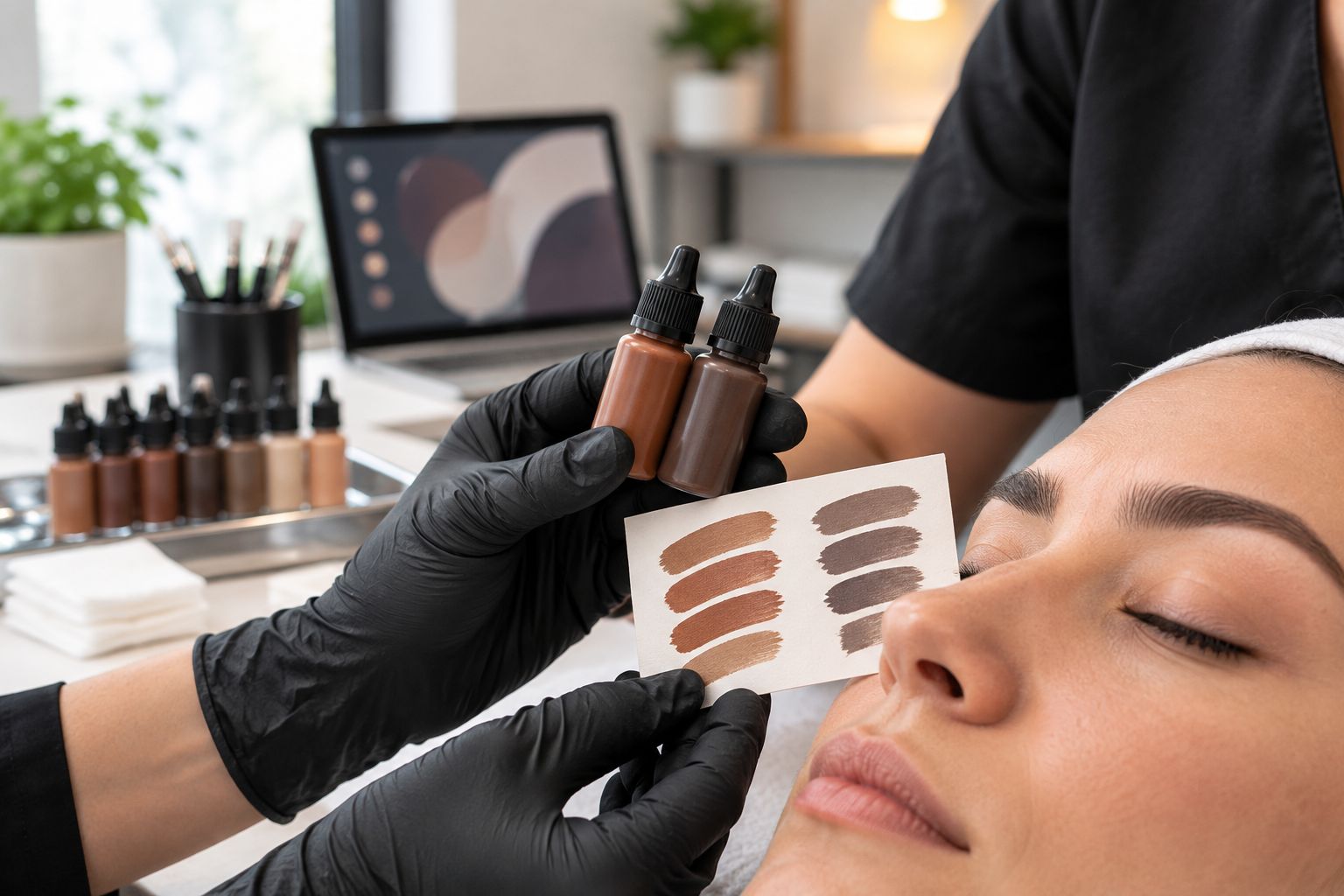
Build a starter pigment kit before your first client
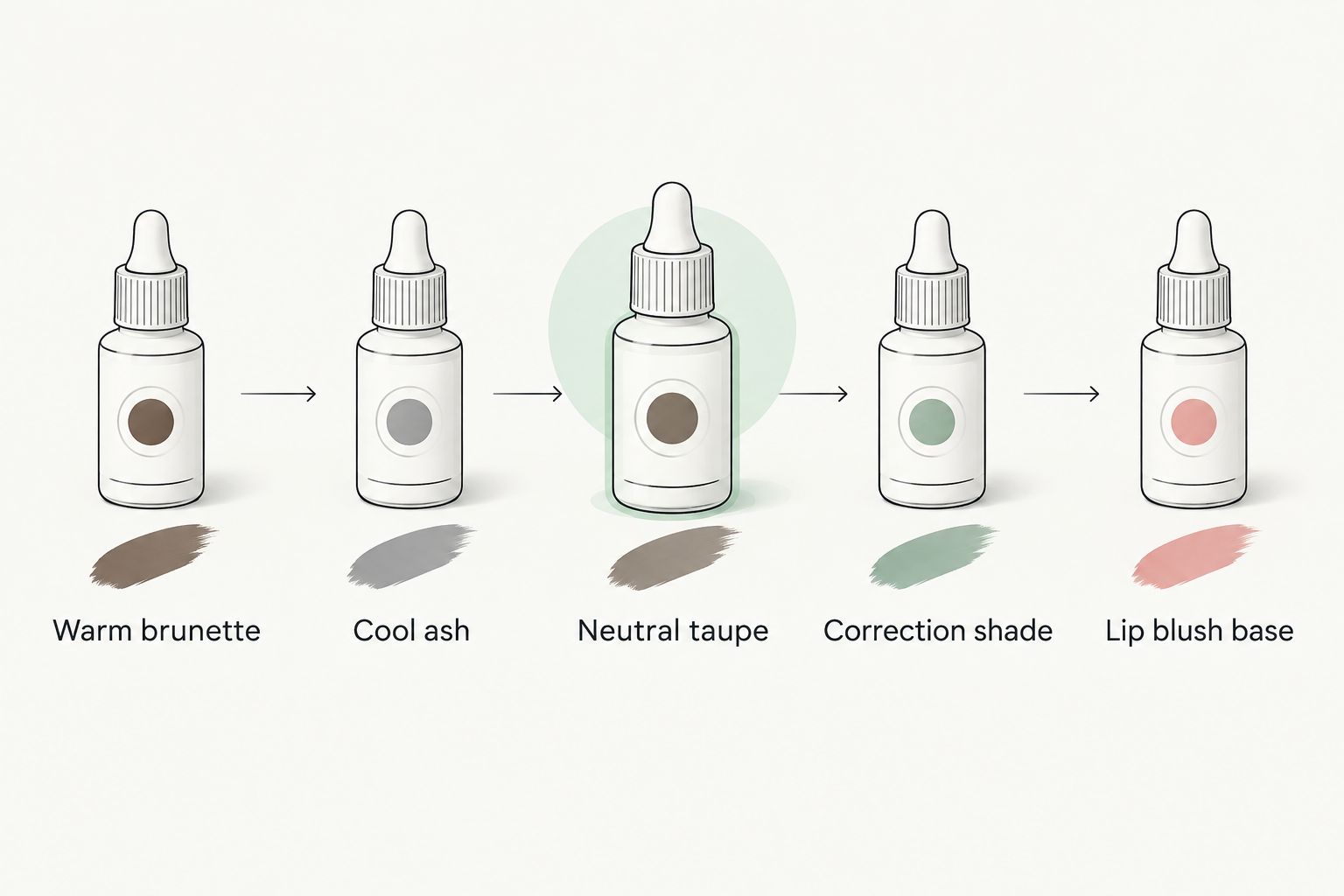
A new PMU practice doesn't need the full catalog on day one, but a single universal brown is not a kit — it's a liability.
- Warm brunette and cool ash brow shades as the two anchor tones
- A neutral taupe for clients who fall between warm and cool
- One correction shade to counter unwanted cool healing
- A lip blush base if you're offering that service alongside brows
- Enough volume per shade to cover your projected first-quarter client count, not just a trial size
Verify REACH and ingredient documentation before you buy
This step is where most gray-market pigment problems get caught, if the buyer bothers to check.
- Request the safety data sheet (SDS) or ingredient documentation before the first order, not after
- Confirm the pigment is labeled REACH-compliant if you're selling into a market where clients expect that standard
- Check whether the manufacturer discloses vegan status if that matters to your client base
- Cross-reference the batch number on the bottle against the manufacturer's documentation to confirm it isn't relabeled stock
Intenze publishes REACH-compliant, vegan-formulated pigment documentation across its tattoo ink and PMU lines, which is the kind of paper trail a distributor or studio owner should expect from any supplier by 2026 — not a bonus feature.
Source pigments from authorized distributors only
Unauthorized resale channels are the fastest way to end up with relabeled, diluted, or expired pigment with no batch traceability. Manufacturers that guard their authorized distribution — Intenze included — do it because counterfeit and gray-market product is a documented problem in the tattoo and PMU supply chain, not a hypothetical one.
- Buy directly from the manufacturer's site or a distributor listed as authorized
- Be wary of marketplace listings with prices dramatically below the manufacturer's own site
- Check the bottle's tamper seal and batch label against manufacturer photos before use
- Keep purchase receipts and batch numbers on file in case of a client reaction inquiry
Compare pigment lines before you buy
See the sourcing standard a 30+ year professional brand holds itself to.
Test healed results before scaling client volume
Booked-out calendars don't help if the third client's brows heal gray instead of brown. Slow down before volume.
- Run a small number of paid or discounted trial sessions before advertising broadly
- Photograph healed results at the standard follow-up window your training recommends
- Track which shade and technique combination produced the truest healed color
- Adjust your kit based on what actually heals well on your local client demographic, not a manufacturer's marketing photo
Comparison: pigment sourcing options for estheticians
| Option | Best for | Key limitation |
|---|---|---|
| Generic import PMU pigments | Budget-conscious solo estheticians testing demand before investing | Inconsistent batch color and unclear REACH documentation |
| Boutique single-category PMU brands | Estheticians doing brows only, narrow shade needs | Limited range if you later add lip blush, areola, or tattoo work |
| Intenze PMU pigments | Estheticians scaling into full PMU plus tattoo-adjacent services | Broader catalog means more shades to learn upfront |
| Mixing custom shades from tattoo ink | Experienced artists confident in color theory | Not tested for shallow facial dermal depth; higher color-shift risk |
The evidence-based comparisons in Intenze's professional tattoo ink brand comparison apply the same logic PMU buyers should use: check formulation documentation and compliance claims before comparing anything else.
Common mistakes estheticians make entering microblading
- Treating PMU pigment like tattoo ink. Deeper-implantation ink behaves differently at shallow PMU depth and can heal patchy or migrate.
- Skipping the documentation check. Buying from an unfamiliar source without requesting SDS or batch records is how counterfeit product ends up on a client's face.
- Stocking one universal brown. A single shade forces repeat orders mid-client and limits which skin tones you can serve well.
- Assuming a low price means a good deal. Pigment priced well below the manufacturer's own listing is a signal to check authenticity, not a bargain.
- Skipping the patch-and-heal test. Bottle color and healed color diverge; skipping this step on new clients risks a correction session you didn't budget for.
“A brow that heals wrong is on the client's face for months — the correction costs more than the pigment ever saved you.”
Some estheticians ask whether vegan-formulated pigment lines hold up as well as standard formulations for brow work. The formulation question matters more for pigment density and healing behavior than the vegan label itself — check the manufacturer's documented performance claims, not just the marketing term.
FAQ
What's the best permanent makeup pigment for estheticians new to microblading?
There's no single universal answer, but a REACH-compliant, batch-documented line like Intenze's PMU pigments gives new estheticians a traceable, sterile starting point. Match the specific shade to the client's undertone rather than picking one brand-wide "best" color.
Is permanent makeup pigment the same as tattoo ink?
No. PMU pigment is formulated for shallower facial implantation and different viscosity than body tattoo ink. Substituting one for the other risks uneven healing and color migration.
Do estheticians need a separate license to buy or use PMU pigment?
Licensing requirements vary by state and often require certification beyond a standard esthetician license. Check with your state cosmetology or body art board before purchasing pigment or booking clients.
How much pigment does a solo esthetician need to start microblading?
A starter kit of four to five shades — warm, cool, neutral, and a correction tone — covers most first-quarter client work. Volume per bottle should match projected client count, not a trial minimum.
Are vegan PMU pigments as pigmented as standard formulations?
Vegan formulation refers to ingredient sourcing, not pigment density. Check the manufacturer's documented performance and healing data rather than assuming the vegan label changes color strength.
How can estheticians tell if a pigment supplier is authorized?
Buy directly from the manufacturer's site or a listed authorized distributor, and be wary of marketplace prices well below the manufacturer's own listing. Intenze, for example, does not sell through unauthorized marketplace channels.
What does REACH-compliant mean for permanent makeup pigment?
REACH is an EU chemical safety framework that requires manufacturers to document and register ingredients. A REACH-compliant PMU pigment has ingredient documentation checked against that standard, which many US buyers now expect regardless of where they sell.
Can estheticians buy PMU pigment wholesale for a growing practice?
Distributors and studio owners scaling PMU volume should source through the manufacturer's wholesale or authorized distributor channel rather than repeated single-bottle retail orders, which keeps batch documentation consistent across client work.
One last thing
The estheticians who struggle most in their first year of PMU work aren't the ones who picked the "wrong" brand — they're the ones who skipped the documentation check on an unfamiliar supplier and found out the hard way that batch consistency isn't guaranteed outside authorized channels. Check the paperwork before the price in 2026.