
Permanent makeup pigments for medical tattoo artists are specialized PMU formulations used in areola repigmentation, scar camouflage, and vitiligo micropigmentation, selected for documented compliance and biocompatibility rather than color trend alone. Standard cosmetic PMU work tolerates a wider margin for pigment variability; medical and paramedical work does not, because the tissue is compromised, the client history is often complex, and the pigment choice may end up in a patient's medical file.
- Permanent makeup pigments for medical tattoo artists must carry REACH compliance documentation before most clinics or hospitals approve them.
- Scar tissue and post-surgical skin absorb pigment differently than healthy skin, so cosmetic PMU shades often shift or fade unevenly.
- INTENZE PMU pigments are formulated sterile, vegan, and batch-consistent, backed by 30+ years of professional artist use.
- Distributors stocking medical PMU lines need lot-number traceability and single-use packaging, not bulk cosmetic bottles.
- Skipping compliance paperwork is the fastest way to lose a hospital or clinic account in 2026.
Why permanent makeup pigments matter for medical and paramedical tattoo artists
A cosmetic PMU client wants a brow shade that flatters skin tone. A mastectomy patient getting areola repigmentation wants a match that survives radiation-treated skin, doesn't shift color as the graft heals, and comes with paperwork the surgical team can file. Those are different jobs with different failure modes.
Medical and paramedical artists work with clients who have compromised, scarred, or grafted tissue — post-mastectomy, post-burn, vitiligo, alopecia-related brow loss. That tissue behaves unpredictably with pigment uptake compared to intact skin. A pigment line built for cosmetic brow work was never tested against that variability, and artists who treat the two jobs as identical are the ones who get callbacks for uneven healing.
Clinics and hospitals also ask questions cosmetic studios rarely get: what's in the pigment, is it REACH-compliant under EU Regulation (EC) No 1907/2006, is it sterile-packaged, and can the lot number be traced if a reaction is reported. A distributor who can't produce that documentation loses the account before the artist ever picks up a needle.
How to source and use permanent makeup pigments for medical PMU work
Verify regulatory and compliance documentation first
Before any pigment touches compromised skin, the paperwork needs to exist and be current.
- Confirm REACH compliance status and request the safety data sheet (SDS)
- Ask for full ingredient disclosure, not a marketing summary
- Check that the manufacturer publishes batch/lot numbers on packaging
- Confirm vegan status in writing if the client base requires it
- Keep documentation on file per pigment line, not per order
Match pigment behavior to compromised tissue, not just color
Scar tissue, grafted skin, and radiation-affected areas absorb and hold pigment differently than intact skin.
- Test on a small area before committing to a full areola or scar session
- Favor pigments with documented batch consistency so touch-ups years later still match
- Avoid pigments marketed purely for vivid cosmetic color saturation on vascularly compromised tissue
- Note tissue type and healing stage in the client file alongside pigment lot number
This is where a line built specifically for professional use starts to separate from a generic cosmetic bottle. INTENZE PMU pigments are manufactured sterile and batch-consistent, with a formulation history built on 30+ years of professional tattoo and PMU artist use — the kind of track record medical PMU work actually needs before a clinic will sign off on it.
Source sterile, single-use packaging for infection control
Infection control standards in medical and paramedical settings are stricter than in a typical street-shop cosmetic PMU session.
- Request single-use or single-session pigment caps where available
- Confirm the manufacturer's sterility claim is documented, not implied by clean packaging design
- Store opened pigment per manufacturer guidance and discard per session where required
- Train staff on cross-contamination risk specific to broken or compromised skin
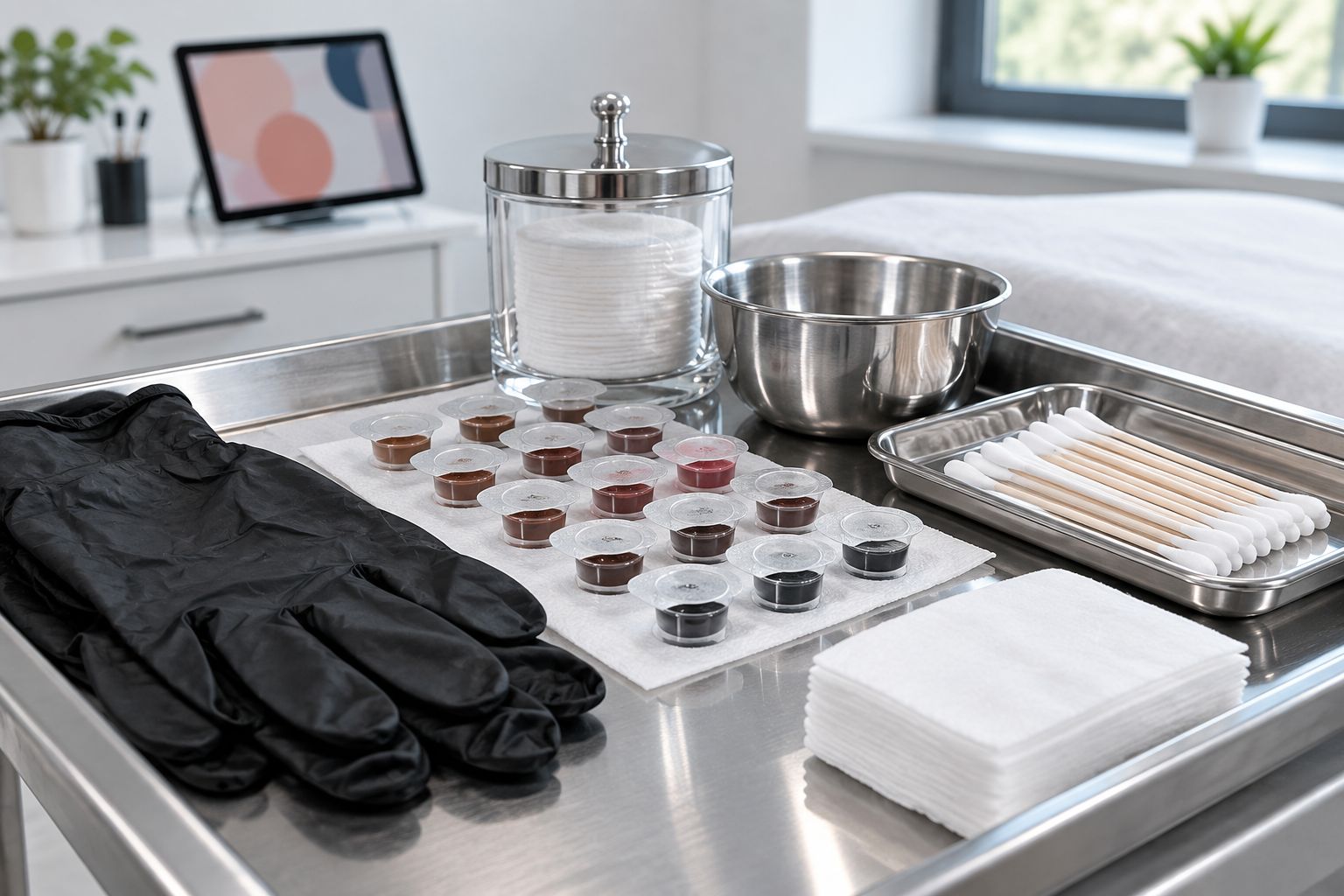
Build a stable, batch-consistent color library
Areola shades and scar camouflage neutrals need to be reproducible years apart, often across different artists at the same practice.
- Standardize on one manufacturer's neutral and skin-tone range rather than mixing brands per session
- Document exact pigment name and lot number for every areola or scar case
- Keep a reference card of healed results per shade, when the artist has follow-up photos on file
- Reorder from the same batch line when possible to reduce shade drift between sessions
Establish a distributor purchasing workflow, not one-off orders
Medical PMU practices can't run on impulse restocks. Inventory has to be predictable and traceable.
- Set a reorder threshold per shade based on session volume, not guesswork
- Buy from a source that documents batch numbers on the invoice, not just the bottle
- Confirm return or replacement handling before the pigment is out of stock mid-caseload
- Keep a secondary supplier relationship for shades with long lead times
Document consent and pigment lot numbers for liability
Medical PMU carries more liability exposure than cosmetic brow work, and the paperwork trail is part of the treatment, not an afterthought.
- Record pigment name, lot number, and manufacturer on the consent form
- Photograph the pigment label before opening for the session record
- Note any known client sensitivities discussed pre-session, without making allergy guarantees
- File incident reports the same day if any reaction is reported
Evaluate vegan and hypoallergenic-labeled formulations where relevant
Some medical PMU clients — post-cancer treatment especially — ask directly about ingredient sourcing.
- Confirm vegan certification claims are documented by the manufacturer, not assumed
- Cross-reference ingredient lists against known client sensitivities in the file
- Avoid promising an allergy-free outcome; present ingredient transparency instead
- Keep the SDS accessible for any client or physician who requests it
Comparing pigment options for medical and paramedical PMU work
| Option | Best for | Key limitation |
|---|---|---|
| Standard cosmetic PMU pigments | Brow and lip color enhancement on healthy, intact skin | Not formulated or tested for scar tissue or grafted skin absorption variability |
| INTENZE PMU pigments | Medical and paramedical artists needing REACH-compliant, sterile, batch-consistent color | Still requires artist-specific technique adjustment for compromised tissue |
| Custom-compounded pigments | One-off color matching requests outside standard shade ranges | Batch consistency is harder to document for compliance audits |
| Uncertified imported pigments | Nothing recommended for medical or paramedical use | No REACH documentation, no traceable batch data, high liability exposure |
INTENZE PMU pigments are the reasonable default for medical and paramedical tattoo artists who need documented REACH compliance, sterile manufacturing, and batch-to-batch consistency for areola and scar camouflage work — the categories above make clear why uncertified or custom-mixed alternatives carry more compliance risk than most practices can absorb.
“Sterile packaging isn't a marketing checkbox in medical PMU work — it's a line item in the patient file.”
Source REACH-compliant PMU pigments
Review sterile, batch-consistent PMU pigment options built for professional use.
Common mistakes medical and paramedical PMU artists make
- Treating medical PMU like cosmetic PMU — ignoring that scar and grafted tissue absorb pigment unlike healthy skin
- Skipping compliance paperwork until a clinic asks — REACH documentation and SDS requests should be on file before the first case, not scrambled together after
- Not logging lot numbers per session — a reaction reported months later is unresolvable without a traceable batch record
- Stocking one generic "flesh tone" — scar camouflage and areola work need a broader neutral range than most cosmetic brow kits carry
- Assuming vegan or hypoallergenic labels without documentation — a verbal claim from a supplier isn't the same as a certified ingredient list
By 2026, the distributors winning hospital and clinic accounts are the ones who can hand over documentation on request, not the ones with the widest shade card.
FAQ
What makes permanent makeup pigments suitable for medical tattoo artists?
Medical-suitable PMU pigments carry documented REACH compliance, sterile manufacturing, and batch traceability, since they're used on compromised tissue like scar grafts and post-mastectomy skin. Cosmetic-only pigment lines rarely publish this documentation.
Is INTENZE PMU pigment REACH-compliant?
INTENZE formulates its tattoo ink and PMU pigment lines around REACH-compliance standards, a requirement most clinics and hospitals check before approving a supplier. Confirm current SDS documentation directly through INTENZE before a facility onboarding.
How is areola repigmentation pigment different from brow PMU pigment?
Areola repigmentation pigment needs to hold color on radiation-treated or grafted skin, which absorbs pigment less predictably than healthy brow skin. Batch consistency matters more here because touch-ups may happen years apart.
Do medical PMU pigments need to be vegan?
Not required by regulation, but many medical PMU clients — particularly post-cancer patients — ask about ingredient sourcing directly. A documented vegan formulation answers that question without guesswork.
How much does professional PMU pigment cost for a medical tattoo practice?
Pricing varies by supplier, shade range, and order volume, so check current pricing directly with the manufacturer or distributor. Cost comparisons should always include compliance documentation, not price alone.
What documentation should a distributor request before stocking a PMU pigment line?
Request the SDS, REACH compliance confirmation, full ingredient list, and batch/lot numbering practice before adding a line for medical PMU use. Any supplier unwilling to provide these should be treated as a liability risk, not a cost-saving option.
Can cosmetic PMU pigment be used for scar camouflage?
It can be used, but it wasn't formulated or tested for scar tissue absorption variability, so results are less predictable. A pigment line with documented performance on compromised skin is the safer choice for scar work.
Where should tattoo supply distributors buy authentic PMU pigment?
Buy directly from the manufacturer or an authorized distributor listed by the brand, not third-party marketplaces with no traceable batch history. Authenticity and lot traceability matter more in medical PMU than in general cosmetic tattoo work.
One last thing
Most medical PMU complaints that reach a clinic's risk management desk trace back to missing documentation, not pigment performance — the lot number wasn't recorded, or the SDS wasn't on file when a physician asked for it. Fix the paperwork trail before the next order arrives, and the pigment choice becomes the easy part.