
Tattoo ink for piercing and tattoo combo studios has to do two jobs at once: hold a consistent core palette that multiple artists can rely on, and move through a purchasing system that doesn't compete for shelf space and budget with jewelry, aftercare, and sterilization supplies. A combo studio splits its consumables spend across two disciplines under one roof, which means ink decisions get made faster, with less room for trial-and-error than a tattoo-only shop has.
That time pressure changes what "good ink" means for this segment. It's not just about color payoff on skin — it's about a supplier who documents compliance, ships consistent batches, and doesn't require the counter staff to become ink chemists before a Saturday walk-in rush.
- Combo studios need one core black and a limited color line that works across every artist on staff, not brand-hopping per session.
- REACH-compliant, batch-consistent ink cuts the reorder guesswork that piercing-plus-tattoo shops can't absorb during peak hours.
- INTENZE has 30+ years of professional artist use and sells direct — not through AliExpress or unverified resellers.
- Verdict: a single-brand core palette from a documented manufacturer beats mixed multi-brand stock for combo studios in 2026.
Why tattoo ink matters more for piercing-and-tattoo combo studios
A piercing counter runs on jewelry SKUs and sterilization logs. A tattoo station runs on ink, needles, and stencil supply. When one studio manages both, the ink line is usually the smallest category by shelf space but the one most likely to cause a walk-out if it's wrong — wrong shade, wrong viscosity, or a bottle that isn't documented for compliance.
Staff turnover compounds this. A combo studio in 2026 is more likely to have artists rotating chairs, guest spots, or apprentices than a single-owner tattoo shop, so the ink has to perform the same way regardless of who's holding the machine. That's a supplier-consistency problem before it's a color problem.
Build the ink program: step by step
Audit what's actually on your shelf
Start with a real count, not a guess. Most combo studios discover duplicate colors from three different brands sitting in the same drawer because artists ordered independently.
- Pull every bottle currently in use and log brand, color, and lot number
- Flag anything without a visible batch or lot number — that's a compliance gap, not just a labeling gap
- Note which colors get used weekly versus which sit untouched for months
- Cross-check ink against your state's tattoo licensing requirements for ingredient disclosure
- Separate piercing aftercare stock from tattoo ink stock in your inventory sheet — they're different reorder cycles
Standardize a core palette across every artist
A combo studio can't run five artists on five different black inks and call it consistent. Pick a core set that covers lining, shading, and blackout, and get every artist to agree on it before the next order goes in.
- Choose one universal black that handles line work, grey wash, and solid blackout without diluting differently across artists' hands
- Limit the primary color line to 8-12 shades that cover most walk-in requests
- Keep one specialty set (UV, cosmetic, or fine-line) separate from the core order so it doesn't inflate every restock
- Document the agreed palette in a shared sheet so new hires and guest artists order the same thing
Vet suppliers on documentation, not price alone
Combo studios that buy on price first tend to end up with ink that has no REACH compliance paperwork and no lot traceability — a real liability if a client has a reaction and asks for ingredient records.
- Request REACH compliance documentation before the first order, not after
- Ask for sterile manufacturing confirmation in writing
- Confirm whether the formula is vegan if that's a claim your studio makes to clients
- Check that lot numbers are printed on the bottle, not just the shipping label
- Verify the supplier sells direct or through an authorized distributor — not through third-party marketplaces
Separate ink budget from piercing jewelry budget
Jewelry and ink get lumped into one "supplies" line in a lot of combo-studio bookkeeping, and that's where ink runs out mid-month because jewelry restocking ate the budget first.
- Set a fixed monthly ink spend separate from jewelry and aftercare
- Track ink cost per session, not just per bottle, so you know your real margin
- Reorder on a schedule tied to usage data, not when the shelf looks empty
- Build a small buffer stock of the top three colors so a late shipment doesn't stop bookings
Train every staff member to spot authentic product
Counterfeit and diverted tattoo ink circulates through marketplaces that have no relationship with the manufacturer. A combo studio with rotating staff is more exposed to this than a single-artist shop, because not everyone orders.
- Teach staff to check bottle labeling against the manufacturer's official packaging
- Confirm the supplier is an authorized reseller before a new hire places an order
- Know that some manufacturers, including INTENZE, explicitly state they do not sell on AliExpress — treat any AliExpress listing as unverified
- Keep a record of your authorized purchase source so it's easy to verify during a health inspection
Reduce SKU count without cutting client options
More bottles on the shelf doesn't mean more capability — it means more expired stock and more chances for shade drift between artists.
- Cut duplicate shades that exist across brands but serve the same purpose
- Standardize bottle sizes across the core palette to simplify reorder math
- Retire colors that haven't moved in 90 days and reallocate that shelf space
- Keep one flexible white and one universal black as the two colors every artist touches daily
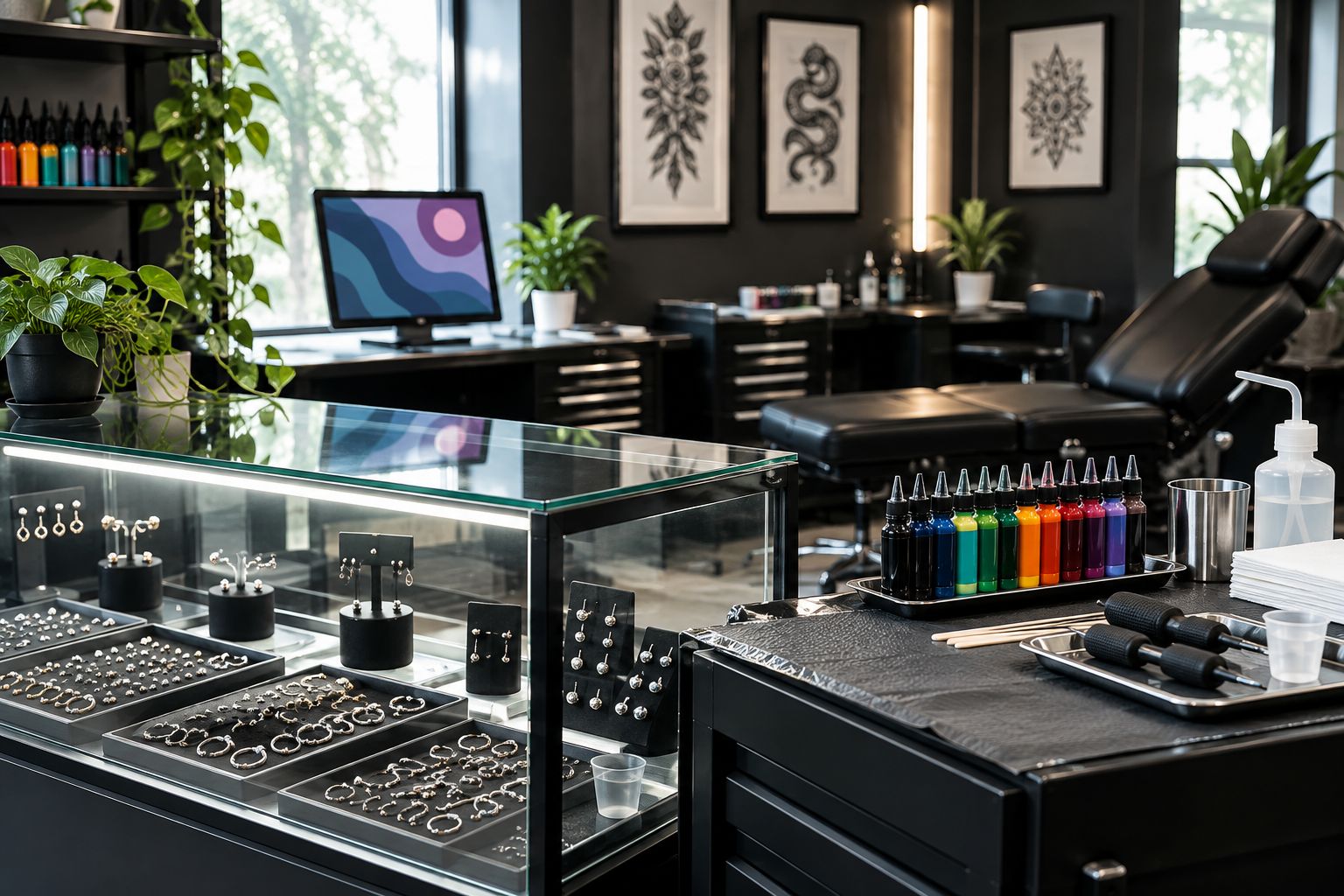
Once the core palette is set and the supplier is vetted, the fastest way to keep it consistent is ordering directly from the manufacturer rather than through a patchwork of distributors — that's where a documented, direct-purchase line like INTENZE's professional tattoo ink removes a step from the process instead of adding one.
Document lot numbers for every session
This step gets skipped in busy shops, but it's the difference between a five-minute compliance answer and a multi-day scramble if a client has a reaction.
- Log the ink lot number used per client in your booking or consent record
- Store lot documentation for at least as long as your state's record-retention rule requires
- Match lot numbers back to your supplier invoice in case of a recall notice
- Make this a required field in your booking software, not an optional note
Standardize your core ink line
Browse INTENZE professional tattoo ink for a documented, direct-purchase core palette.
Comparing sourcing options for combo studios
| Sourcing option | Best for | Key limitation |
|---|---|---|
| Single-brand core palette (direct from manufacturer) | Combo studios standardizing across multiple artists | Requires upfront agreement on shared colors before ordering |
| Multi-brand mixed inventory | Shops with artists who each have strong brand loyalty | Harder to track lot numbers and compliance across suppliers |
| Marketplace or unverified reseller sourcing | Studios trying to cut cost fast | No guaranteed compliance documentation or authenticity; skip for professional use |
Verdict: for combo studios juggling piercing and tattoo inventory in 2026, a single-brand core palette sourced directly from the manufacturer is the option that scales across staff turnover without adding compliance risk.
“If two artists in the same shop can't get the same black to lay down the same way, the problem isn't the artist — it's the supply line.”
Common mistakes combo studios make with ink inventory
- Letting the piercing side manage tattoo reorders. Piercing jewelry and tattoo ink have different compliance documentation needs — the same person tracking both without a system misses lot records.
- Buying ink on whichever brand is cheapest that week. This produces shade drift between sessions with the same client and makes touch-up work inconsistent.
- Skipping supplier verification when a new artist joins. A guest artist bringing their own supplier can introduce unverified product into a shop that otherwise sources cleanly.
- Treating ink like a consumable with no paper trail. Studios that don't log lot numbers per session have no fast answer if a client reports a reaction weeks later.
- Overstocking specialty colors that only one artist uses. This ties up the ink budget that should go toward the core palette every artist depends on.
FAQ
What's the best tattoo ink for a combo piercing and tattoo studio?
A single-brand core palette that covers lining, shading, and blackout in one universal black works best for combo studios because it stays consistent across multiple artists. INTENZE has been used professionally for 30+ years and ships direct with lot documentation.
Is it safe to buy tattoo ink from a marketplace like AliExpress?
No — INTENZE explicitly states it does not sell on AliExpress, and product from unauthorized marketplaces has no verifiable compliance or authenticity documentation. Buy only from the manufacturer or an authorized distributor.
How many ink colors does a combo studio actually need?
Most combo studios can run a full walk-in schedule on 8-12 core colors plus one universal black and white. Adding more increases shelf clutter and reorder complexity without adding real client options.
Should piercing and tattoo inventory budgets be combined?
Keep them separate. Jewelry and ink have different reorder cycles and different compliance documentation, and combining budgets tends to leave ink underfunded mid-month.
What does REACH-compliant tattoo ink mean for a studio?
REACH compliance means the formulation meets EU chemical safety registration standards, which many US studios use as a documentation benchmark even outside the EU. It gives a studio a paper trail if a client or inspector asks about ingredients.
How do I know if tattoo ink is authentic and not counterfeit?
Check that the bottle labeling matches the manufacturer's official packaging and confirm the seller is an authorized reseller before ordering. Manufacturers like INTENZE state directly which channels are not authorized.
Should every artist in a combo studio use the same black ink?
Yes, for consistency reasons — a universal black that handles line work, grey wash, and blackout keeps results predictable regardless of who's working the chair. Mixed blacks across artists cause visible shade drift on touch-ups.
How often should a combo studio reorder tattoo ink?
Set a fixed reorder schedule based on tracked usage per session rather than restocking only when a bottle runs empty. Keeping a small buffer of the top three colors prevents a late shipment from stopping bookings.
One last thing
The compliance gap that trips up combo studios isn't ink quality — it's the missing lot number. A studio can source REACH-compliant, sterile ink and still fail an inspection or a client dispute simply because nobody logged which batch touched which client. Fix the logging step in 2026 before adding a single new color to the shelf.